Levron Aerogel's nano-porous silica platform is engineered for passive thermal protection — reducing heat transfer, supporting safer system behavior, and preserving performance integrity under demanding high-temperature conditions across energy, industrial, and specialized applications.
In advanced material systems, fire resistance and thermal protection are load-bearing engineering requirements — not compliance checkboxes or secondary specifications. In many demanding applications, the absence of adequate passive fire protection defines ultimate system failure risk.
In many advanced systems — EV batteries, ESS enclosures, industrial process vessels — a local heat event does not stay local. Without adequate thermal barriers, heat transfers through material contact, conduction pathways, and gas-phase mechanisms to adjacent components. Fire resistance is the mechanism that slows this propagation.
Unlike active suppression systems, passive thermal barriers function continuously — under all conditions, without sensors, power, or intervention. They represent the architecture-level safety layer. When active systems delay engagement or fail, passive barriers remain the last line of material defense.
Ordinary insulation is optimized for steady-state thermal efficiency. Fire-resistant thermal protection must perform under extreme transient conditions — surviving direct flame exposure, thermal shock, and sustained high-temperature events while preserving its structural and barrier integrity.
Many applications — battery enclosures, portable industrial equipment, compact process systems — cannot accommodate thick conventional fire protection layers. The demand is for reliable passive protection within stringent form-factor and mass constraints.
Fire resistance in an advanced material is not a simple pass/fail property. It is a system-level function. The material must interrupt heat pathways, maintain structural integrity under sustained thermal exposure, and support adjacent-system protection — all within real design constraints.
The primary function. By reducing thermal conductivity to 0.012–0.016 W/m·K at the platform level, the barrier dramatically slows the rate at which heat reaches protected systems — buying critical time in a thermal event.
Thermal isolation of neighboring cells, modules, enclosures, and structural elements from the hot zone. Compartmental protection logic — keeping thermal events contained to their origin zone.
Structural and thermal barrier function must be maintained during — not just before — heat exposure. Levron's silica-based platform retains its barrier logic at sustained high temperatures.
Compactness is a real constraint in many applications. The ability to provide equivalent or superior protection at significantly lower thickness compared to conventional materials is not a convenience — it is an engineering requirement.
Passive fire protection contributes to system safety architecture regardless of active system state. Material-level fire resistance works continuously, silently, and without power — a fundamental layer in any safety stack.
Fire-resistant materials must be compatible with real product architectures — not require special handling, excessive thickness allocation, or compromises to adjacent system design. Integration feasibility is part of the protection logic.
The following performance data is drawn from published Levron Aerogel narratives and verified material characterization. Where relevant, platform-level versus product-level context is clearly distinguished.
Non-combustible fire class designation for the felt product platform. A1 represents the highest fire performance level for construction material classification contexts.
Glass wool-reinforced Levron Aerogel Felt. Complete thermal protection function across a 850-degree span from cryogenic to high-temperature service.
Ceramic wool-reinforced configuration extends the upper operating limit to 1300°C — appropriate for demanding industrial furnace, kiln, and process system environments.
Platform-level conductivity among the lowest of any solid material. Felt product conductivity approximately 0.022–0.024 W/m·K in applied configuration with reinforcement.
Published fire narrative indicates meaningful performance advantage at significantly reduced material thickness. Compact barrier logic with real space and mass savings.
Superhydrophobic behavior maintained at operating temperature. Fire resistance performance is not degraded by moisture exposure — unlike conventional mineral wool alternatives.
High specific heat supports thermal energy absorption during rapid transient events — contributing to extended time-to-temperature-rise in protected zones during heat excursions.
Ultra-high air content ensures minimal solid-phase conduction pathways — a structural reason for exceptional thermal barrier performance at all operating temperatures.
Published data and material platform characteristics. Platform-level values are for pure silica aerogel; felt product values include reinforcement composite effects.
| Parameter | Platform Level | Felt (Applied) | Special Config | Context |
|---|---|---|---|---|
| Thermal Conductivity | 0.012–0.016 W/m·K | 0.022–0.024 W/m·K | — | Among lowest of any solid material |
| Operating Temperature | — | -200°C to +650°C | Up to +1300°C | Glass wool / Ceramic wool variant |
| Fire Classification | — | A1 Class | — | Non-combustible classification |
| Flame Test (1000°C) | — | 2 cm — test stopped | — | vs. 9 cm conventional at 9 min |
| Hydrophobicity | 165° contact angle | Active to 650°C | — | Maintained post-impact |
| Specific Heat | ~1000 J/kg/K | ~1000 J/kg/K | — | Thermal energy absorption |
| Porosity | 90–95% | — | — | Nano-porous air-dominant structure |
| Pore Size | 50–100 nm | — | — | Sub-mean-free-path of air molecules |
Fire resistance in advanced material systems must be understood across multiple performance dimensions — not just whether a material survives a single flame exposure. Temperature magnitude, duration, heat flux, structural retention, and adjacent-system protection all contribute to real thermal safety value.
The actual temperature the material must survive and continue to function at — not simply a brief exposure test value.
Performance at extended exposure — not just transient flame contact. How long does the material retain barrier function?
The rate of heat transfer the material can resist — a critical parameter for fire-barrier specification in real thermal event scenarios.
Does the material maintain its physical form and barrier geometry under sustained heat? Collapse or shrinkage creates heat path gaps.
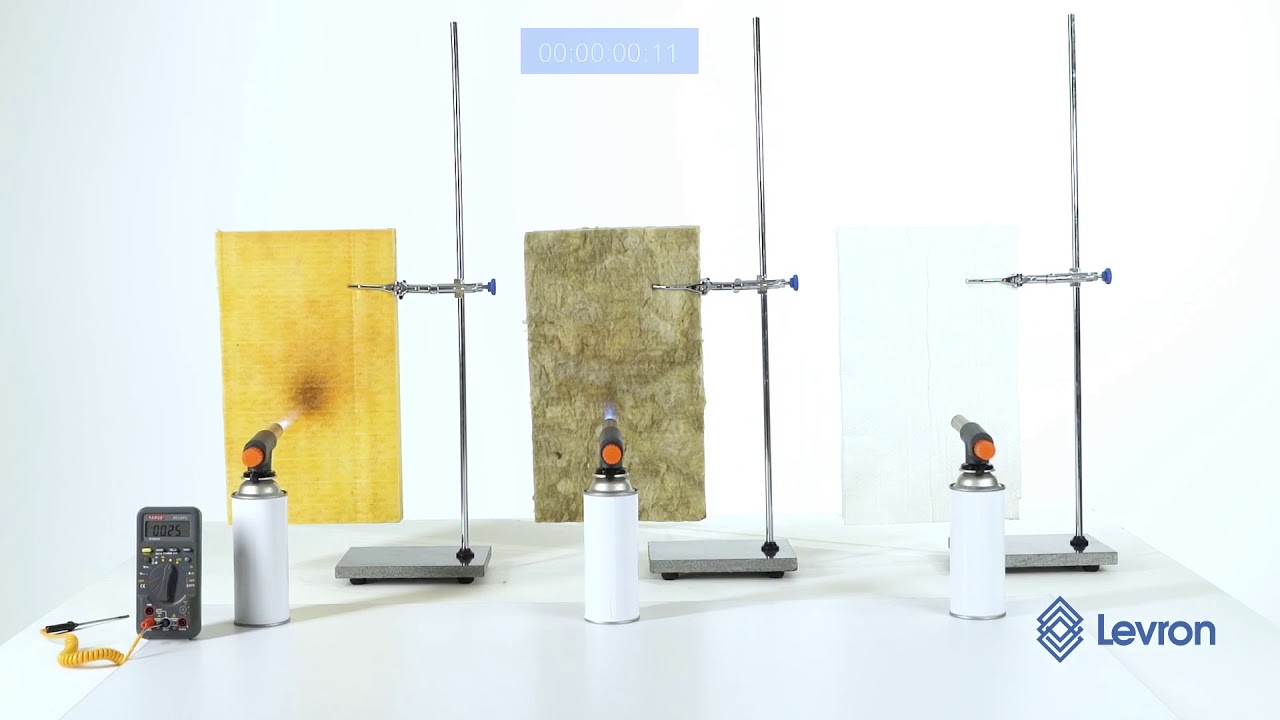
Fire resistance, thermal management, and structural integrity — demonstrated in practice with actual material samples.
In real engineering systems, available space for thermal protection is finite. The ability to deliver high-performance passive fire protection within significantly reduced thickness is not a secondary feature — it is the enabling condition for fire protection in compact, weight-constrained, or space-critical applications.
EV battery pack design is among the most space-constrained engineering environments. Multi-millimeter savings per barrier layer across an entire pack translates to significant energy density, mass, and cooling infrastructure advantages.
Energy storage systems require fire-resistant compartmental isolation between modules. Thinner barriers support more modules per enclosure, better thermal management architecture, and cleaner electrical routing.
Compact insulation reduces outer diameter, simplifies pipe routing, supports closer installation clearances, and reduces total material cost — with no compromise to thermal or fire protection performance.
Weight and volume constraints in defense systems are absolute. Passive fire protection that can be delivered at minimal mass and thickness is a critical enabling specification for mission-critical thermal safety applications.
Safety-critical materials must perform reliably across all environmental conditions — not only in controlled laboratory settings. Moisture exposure, temperature cycling, and long-term field conditions must not degrade passive protection behavior.
Conventional mineral wool materials absorb moisture from ambient environments over service life. When wet, their thermal performance degrades significantly — reducing effective fire protection capability in real field conditions. Levron Aerogel's 165° superhydrophobic contact angle prevents water absorption and maintains barrier function regardless of ambient humidity, condensation, or wet installation conditions.
Qualitative comparison based on published material behavior. Conventional material moisture loss is well-documented in insulation performance literature. Levron behavior based on published hydrophobicity narrative.
Fire protection materials that degrade over time provide diminishing safety value. Levron Aerogel's published narrative indicates stable thermal and hydrophobic performance over extended service periods — supporting consistent passive protection throughout system lifecycle without maintenance intervention.
In systems subject to temperature cycling — industrial heaters, ESS charge/discharge environments, outdoor installations — the barrier material must not develop structural cracks or delamination. Levron's aerogel structure exhibits relevant thermal shock resistance characteristics that support barrier integrity over operational cycles.
An objective, technically disciplined comparison of fire resistance and safety performance criteria across insulation material classes. This is not promotional benchmarking — it is engineering-grade evaluation.
| Evaluation Criterion | Rock Wool | Glass Wool | Generic Fire Board | Levron Aerogel |
|---|---|---|---|---|
| Flame Exposure Logic | Relies on mass and density to slow heat transfer | Relies on fiber resistance; performs to 450–500°C max | Rigid board, limited flexibility, mass-dependent | Nano-porous structure interrupts all 3 heat paths |
| Fire Test Performance (1000°C) | 5 cm fails at ~9 minutes | 4 cm fails at ~9 minutes | Variable — depends on board type | 2 cm — test stopped, material intact |
| Max Operating Temperature | 500–700°C | 400–500°C | Varies (600–900°C typical) | To +1300°C (ceramic config) |
| Fire Classification | A1 or A2 (fiber type dependent) | A1 or A2 | A2 or B (product-specific) | A1 (felt platform) |
| Thickness for Protection | 5–6 cm for comparable performance | 4–6 cm for comparable performance | 40–80 mm typical board thickness | ~2 cm in published test |
| Moisture Resistance | Poor — significant performance loss when wet | Poor — absorbs moisture readily | Moderate — board can delaminate | 165° superhydrophobic — no absorption |
| Long-Term Stability | Moderate (10–15 year typical) | Moderate (10–15 year typical) | Product-dependent | 20+ years published expectation |
| Compact Integration Value | Low — thick material required | Low — still requires 4–6 cm | Low to moderate (rigid form) | High — flexible felt, thin format |
| Safety System Friendliness | Moderate — bulky, moisture-sensitive | Moderate — performance degrades when wet | Moderate — rigid, limited application formats | High — flexible, moisture-stable, thin |
Comparison values are representative ranges for conventional material classes based on published insulation industry literature. "Conventional materials" performance is widely documented and does not represent a specific product claim. Levron Aerogel values based on published narrative and internal characterization. Engineering verification recommended for specific application design.
Fire resistance is valuable when it supports safer system behavior and preserves design intent under heat stress. The following applications illustrate where Levron Aerogel's passive thermal protection logic has direct relevance.
Cell-to-cell and module-level thermal barriers interrupting propagation pathways during thermal runaway events. Thin format supports compact pack architecture without mass or volume penalty.
Fire barrier solutions for battery pack enclosures, structural fire separation, and thermal isolation between high-energy storage zones and vehicle or stationary infrastructure.
Large-scale energy storage systems require fire-resistant compartmental isolation between storage modules. Passive thermal barriers between racks, modules, and enclosures support safer failure containment.
Pipes, valves, boilers, furnaces, kilns, and process vessels operating at extreme temperatures. Compact high-temperature insulation with fire-resistant characteristics and long-term environmental stability.
Fire-resistant thermal protection for engineered enclosures, control panels, MV/HV electrical cabinets, and mission-critical system housings. Passive protection that functions without active systems.
Mission-critical thermal protection in military platforms, aerospace systems, and specialized equipment where weight, volume, and system performance specifications are absolute. Custom development pathway available.
Levron Aerogel's fire resistance is not an additive property — it is an emergent consequence of the material's fundamental nano-porous silica architecture. Understanding the structure-property relationship explains why this material class performs differently from conventional thermal materials under extreme thermal conditions.
The silica-based aerogel backbone is inherently inorganic and thermally stable. Unlike organic materials that combust or degrade at fire-temperature conditions, the silica network retains structural integrity — providing the load-bearing framework for continued barrier function.
Pore diameters below 50–100 nm fall below the mean free path of air molecules at atmospheric pressure. This physically prevents convective gas circulation within the pore network — suppressing gas-phase thermal conduction. Combined with minimal solid-path contact area and radiation scattering, all three heat transfer mechanisms are simultaneously attenuated.
With more than 90% of material volume occupied by air, the solid silica network represents less than 10% of total material volume. This drastically reduces the total solid-phase conduction cross-section — the primary mechanism by which dense conventional materials transfer heat through their bulk.
A specific heat of approximately 1000 J/kg·K means the material can absorb significant thermal energy per unit mass before transmitting it onward. This contributes to thermal delay — extending the time before protected zones reach critical temperatures during a thermal event.
Fire resistance and passive thermal protection are expressed through multiple products and solution categories within the Levron Aerogel platform — each adapted to specific application constraints and performance requirements.
7 years of dedicated aerogel R&D, a 4,000 m² integrated production facility, and active capability across multiple aerogel chemistry families make Levron Aerogel a serious, technically credible partner for demanding fire protection and thermal safety challenges.
Production methodology engineered from the ground up for nano-product derivation from diverse raw materials — not adapted from traditional mineral wool manufacturing.
Application-specific configurations designed in collaboration with OEM engineers, battery system developers, and industrial system integrators — from sample through pilot to scaled volume.
Ongoing development across multiple aerogel chemistry platforms — each exploring next-generation performance capabilities for demanding thermal, energy, and specialty applications.
Not a prototype or research project — an active commercial product platform with existing material availability, standard and custom format capabilities, and supply chain infrastructure.
Technical documentation, explainers, and tools for engineers and procurement teams evaluating Levron Aerogel for fire-resistance and thermal safety applications.
Complete technical specification including thermal conductivity, fire classification, temperature range, mechanical properties, and dimensional data.
Download Technical Datasheet →Particle-based aerogel specifications: thermal conductivity, surface area, particle size distribution, and application guidance.
Download Granules Datasheet →Environmental, safety, and handling specifications. Levron Aerogel is classified as non-toxic, eco-safe, and human-friendly.
Download MSDS →Receive physical Levron Aerogel Felt and Granule samples for hands-on evaluation, thermal testing, and internal qualification procedures.
Request Sample Kit →Benchmarking of Levron Aerogel versus conventional insulation materials across fire resistance, temperature capability, moisture resistance, and thickness efficiency criteria.
Request Comparison Guide →Book a one-on-one session with the Levron Aerogel engineering team to discuss your specific fire protection challenge and evaluate material fit.
Schedule Consultation →A1 is the highest fire performance classification in European construction product standards, indicating that the material does not contribute to fire in any stage of development. For the Levron Aerogel Felt platform, A1 classification reflects the non-combustible nature of the silica-based aerogel and glass wool reinforcement matrix. Specific test certification details are available upon request — we do not make untested compliance claims.
In a published controlled laboratory flame test at 1000°C: 5 cm rock wool and 4 cm glass wool — tested simultaneously — both showed structural failure within approximately 9 minutes. 2 cm Levron Aerogel Felt was subjected to the same flame exposure and remained intact when the test was voluntarily stopped. This narrative is published by Levron Aerogel and available upon request. We present it as a comparative durability indicator, not as a certified fire rating standardized test result.
No material is fireproof under all conditions. Levron Aerogel Felt is fire-resistant and thermally stable at extreme temperatures — not incombustible to all possible exposures. The silica aerogel structure is inherently inorganic and non-combustible (A1 classification), but performance is condition-dependent (temperature, exposure duration, heat flux, configuration). We do not use "fireproof" as a material property descriptor.
Levron Aerogel materials can be incorporated into fire protection system testing and certification processes. We do not claim pre-existing system-level certifications or preapprovals. We provide material datasheets, safety documentation, and technical support for customers conducting their own application testing and regulatory evaluation. Specific certification pathway support is available through engineering consultation.
Conventional mineral wool insulators (rock wool, glass wool) can absorb moisture from ambient environments over time — reducing effective thermal resistance and potentially increasing the rate of heat transmission in fire-adjacent conditions. Levron Aerogel's 165° superhydrophobic surface prevents water absorption, ensuring that published thermal conductivity and fire-resistance behavior is maintained in field conditions regardless of humidity, condensation, or water contact events.
Thermal insulation in normal operation is about maintaining steady-state temperature differences efficiently. Fire resistance is about barrier function during transient, extreme thermal events — where temperatures may reach 400–1000°C+ and the material must maintain structural integrity and thermal isolation under conditions far exceeding normal operational parameters. Levron Aerogel's platform addresses both functions through the same nano-porous silica architecture.
Optimal thickness depends on application-specific parameters: expected heat flux, required time-to-temperature-rise in the protected zone, available physical space, system architecture, and safety design targets. Our engineering team works collaboratively with customers to evaluate these parameters and recommend configurations. We do not provide one-size-fits-all thickness specifications for safety-critical applications.
Yes. Levron Aerogel Felt and Thermal Barrier Sheets are relevant to ESS/BESS module isolation, compartmental separation, and enclosure lining applications. We work with energy storage system developers and system integrators to evaluate configuration requirements and provide application-appropriate material samples for qualification programs. Contact our engineering team to begin the discussion.
Whether you're designing a battery pack, specifying an ESS system, engineering an industrial installation, or evaluating materials for a specialized application — our team can support the evaluation process.
Precision-format fire-resistant thermal barriers for battery, enclosure, and industrial fire protection applications.
View Thermal Barrier Sheets →Aerogel-based thermal barriers for cell-to-cell, module-level, and pack-level thermal event management in EV systems.
View EV Battery Safety →Passive fire protection layers for battery pack enclosures, structural separations, and compartmental fire containment.
View Fire Barriers →Discuss your specific application — fire protection requirements, material configuration needs, sample evaluation, or pilot programs. We respond to technical inquiries within one business day.