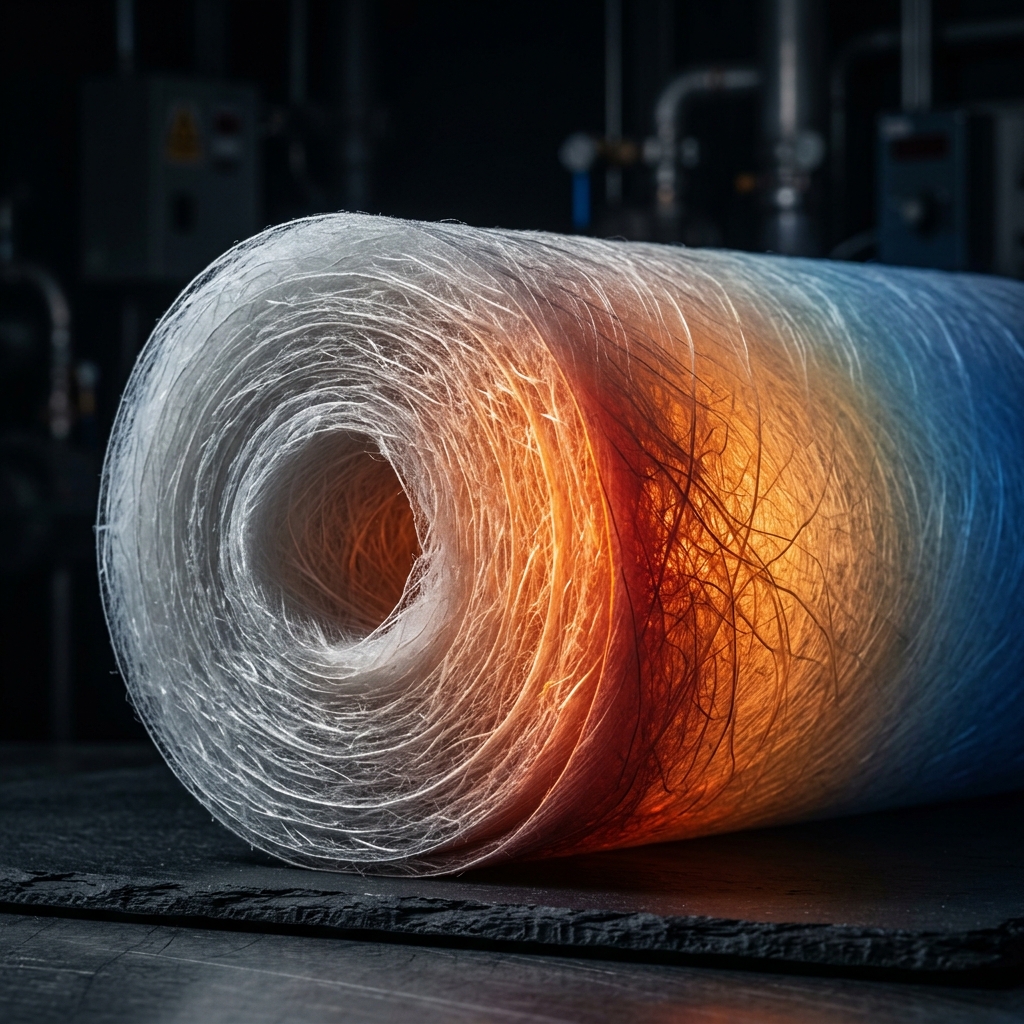
Silica-based aerogel-enhanced insulation felt engineered for advanced thermal protection, fire-resistant performance, moisture resilience, and compact high-performance insulation across demanding industrial and technical applications.
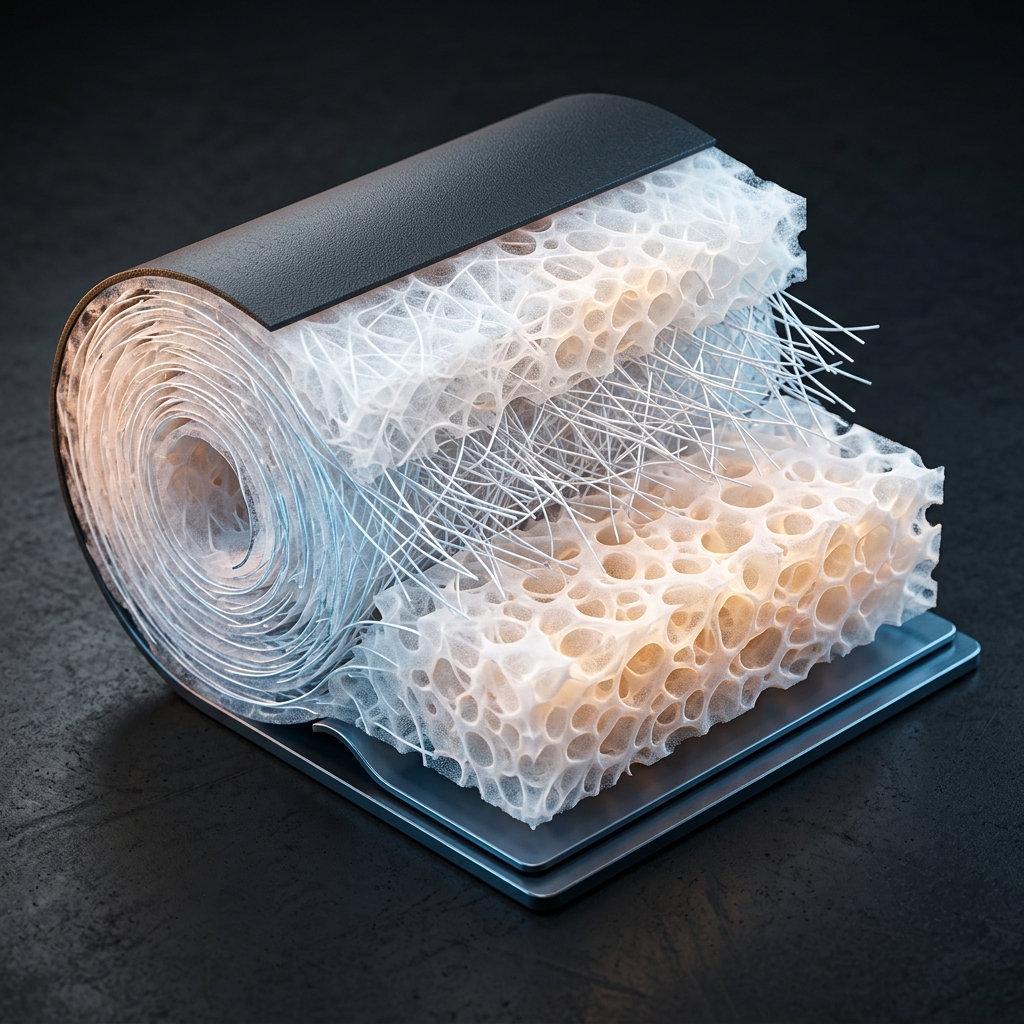
Levron Aerogel Felt is a lightweight, silica-based, aerogel-enhanced insulation material produced from Levron Aerogel reinforced with stabilized glass wool. The result is a flexible, high-performance thermal barrier that combines the extraordinary insulation properties of nano-porous aerogel with the structural integrity of engineered fiber reinforcement.
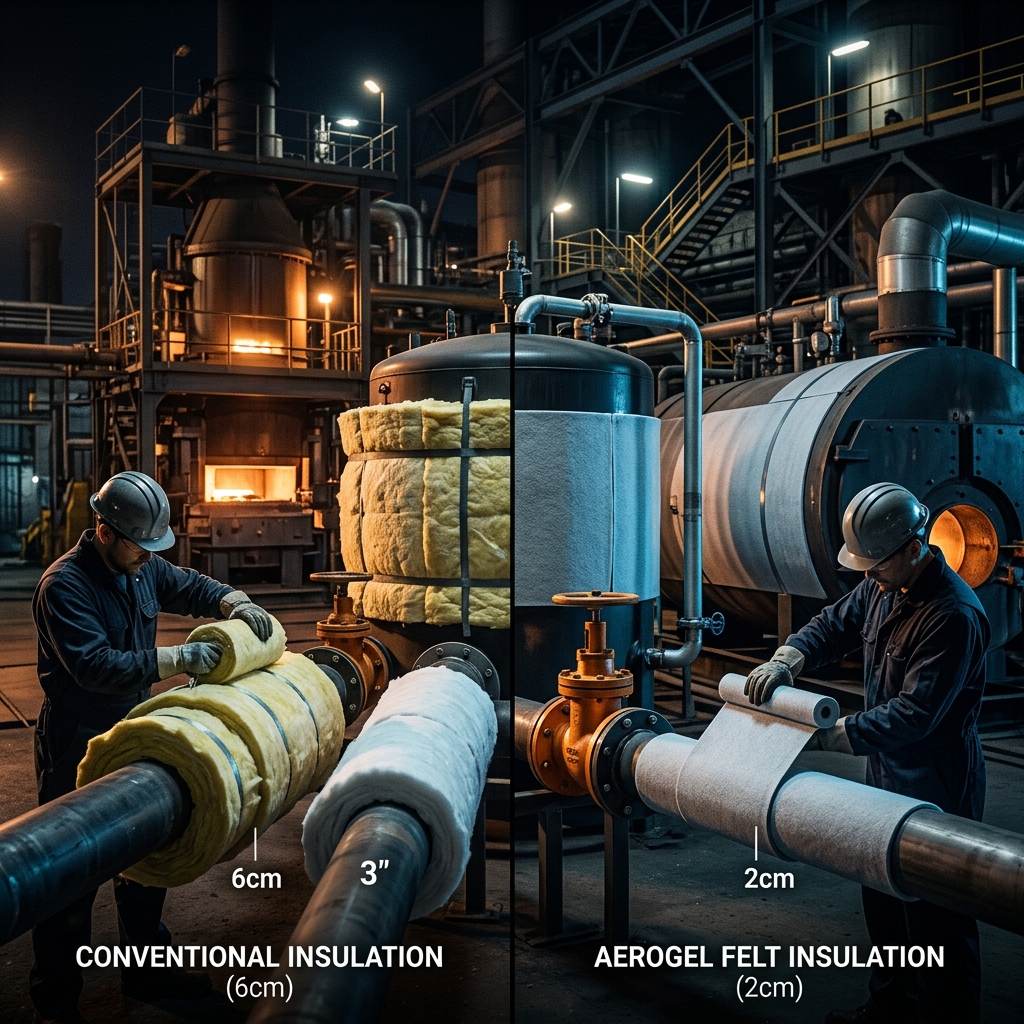
Unlike conventional insulation materials that rely on bulk thickness for thermal resistance, aerogel felt achieves high-performance insulation in a compact, flexible format — enabling installation in constrained geometries, wrapped surfaces, and space-critical systems where conventional materials cannot perform.
50–100 nm pore sizes trap air at the molecular level
Structural stability with aerogel integration
Roll-form for curves, wraps, and complex surfaces
Special configuration for up to 1300°C
The felt format transforms aerogel's extraordinary thermal performance into a commercially practical, installation-ready product form that integrates into actual engineered systems.
Conforms to pipes, tanks, and curved geometries — eliminating complex fabrication for non-flat surfaces.
6–10 mm felt thickness delivers insulation equivalent to significantly thicker conventional materials, saving critical space.
Die-cut to specific dimensions. Trim on-site. Adapt to complex system geometries without specialized tooling.
Reduced thickness, lower weight, and simpler installation logic translate to lower total installed cost across systems.
Every parameter represents measured performance from Levron Aerogel Felt testing — providing the technical foundation for advanced insulation material evaluation.
| Property | Standard | Value |
|---|---|---|
| Thermal Conductivity | EN 12667 | 0.022–0.024 W/m·K |
| Operating Temperature Range | — | -200°C to +650°C |
| Ceramic Variant Max Temp | — | Up to 1300°C |
| Density | EN 1602 | 300–1500 kg/m³ |
| Porosity | BET Analysis | 90–95% |
| Fire Classification | EN 13501-1 | A1 (Non-Combustible) |
| Water Contact Angle | Sessile Drop | 165° |
| Vapor Permeability (μ) | EN 12086 | 5–5.5 |
| Compressive Strength | EN 826 | ~40 kPa |
| Specific Heat | — | ~1000 J/kg/K |
| pH | — | ~8 |
| Thickness | — | 6–10 mm |
| Width | — | 100 cm |
| Roll Length | — | 20 m |
| Expected Service Life | — | 20+ years |
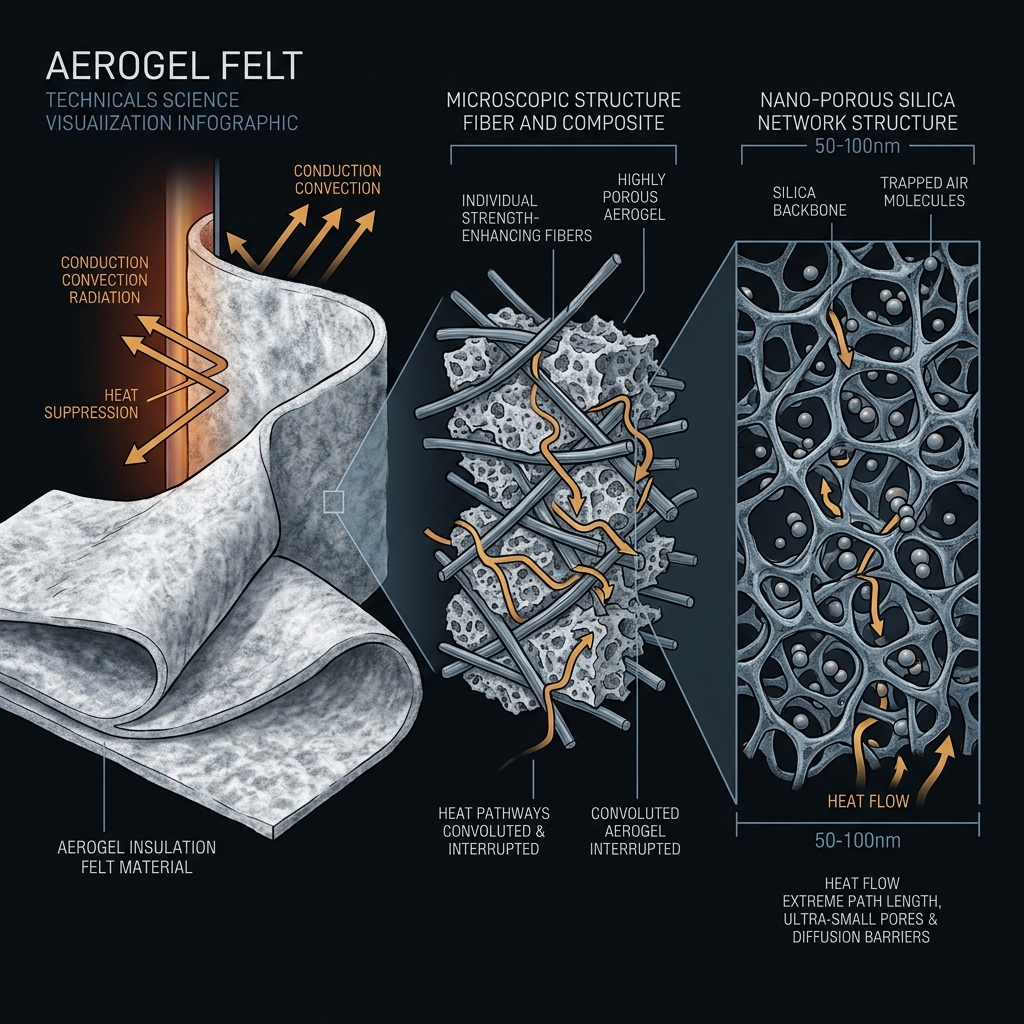
The performance of Levron Aerogel Felt is not achieved by adding more material. It's engineered into the fundamental molecular architecture — a three-dimensional silica network that suppresses heat transfer through three simultaneous mechanisms.
A silica network with 50–100 nm pore sizes — smaller than the mean free path of air molecules at standard conditions. This physically constrains gas-phase heat transfer, creating more effective thermal shielding per millimeter than any conventional insulation material.
Conduction minimized by tortuous solid pathways through the silica skeleton. Convection eliminated by molecular-scale air confinement. Radiation scattered and absorbed within the pore network. All three mechanisms addressed simultaneously — unlike conventional materials that address only one or two.
More than 90% of the material volume is air — one of the lightest solid structures known. Combined with glass wool reinforcement, this air-dominant architecture delivers exceptional thermal performance with minimal mass.
Chemical modification of the silica surface creates 165° superhydrophobic behavior that persists to 650°C. Moisture cannot penetrate the material structure, eliminating the performance degradation that characterizes conventional insulation systems in humid or wet environments.
Levron Aerogel Felt serves as a high-performance insulation platform across four distinct application clusters — from industrial heat management to advanced thermal protection concepts.
Wrap-around insulation for process pipes, storage tanks, and heat exchangers — 3× thinner than conventional at equal thermal resistance.
High-temperature insulation for combustion systems, process furnaces, and thermal processing equipment.
Compact, moisture-resistant insulation for refineries, chemical processing, and high-temperature process heat systems.
Lightweight engine compartment, exhaust, and underbody insulation for commercial and specialty vehicles.
Compact, high-performance insulation for cold-chain vehicles — maintaining temperature stability with reduced wall thickness.
Ultra-lightweight thermal barriers for air vehicle compartments and propulsion-adjacent thermal shielding concepts.
Operating range to -200°C with consistent superhydrophobic behavior — no moisture-related performance degradation in cold environments.
Dual-temperature insulation for thermal storage systems maintaining consistent performance across temperature cycling.
Insulation for environments requiring precise thermal stability with zero performance drift over extended service life.
Ultra-thin insulation for systems where volume is at a premium — electronic enclosures, compact assemblies, and miniaturized thermal zones.
Custom multilayer configurations combining aerogel felt with structural or reflective layers for application-specific thermal performance.
High-temperature protective barriers for battery-adjacent thermal management — where fire resistance and compact design are critical.
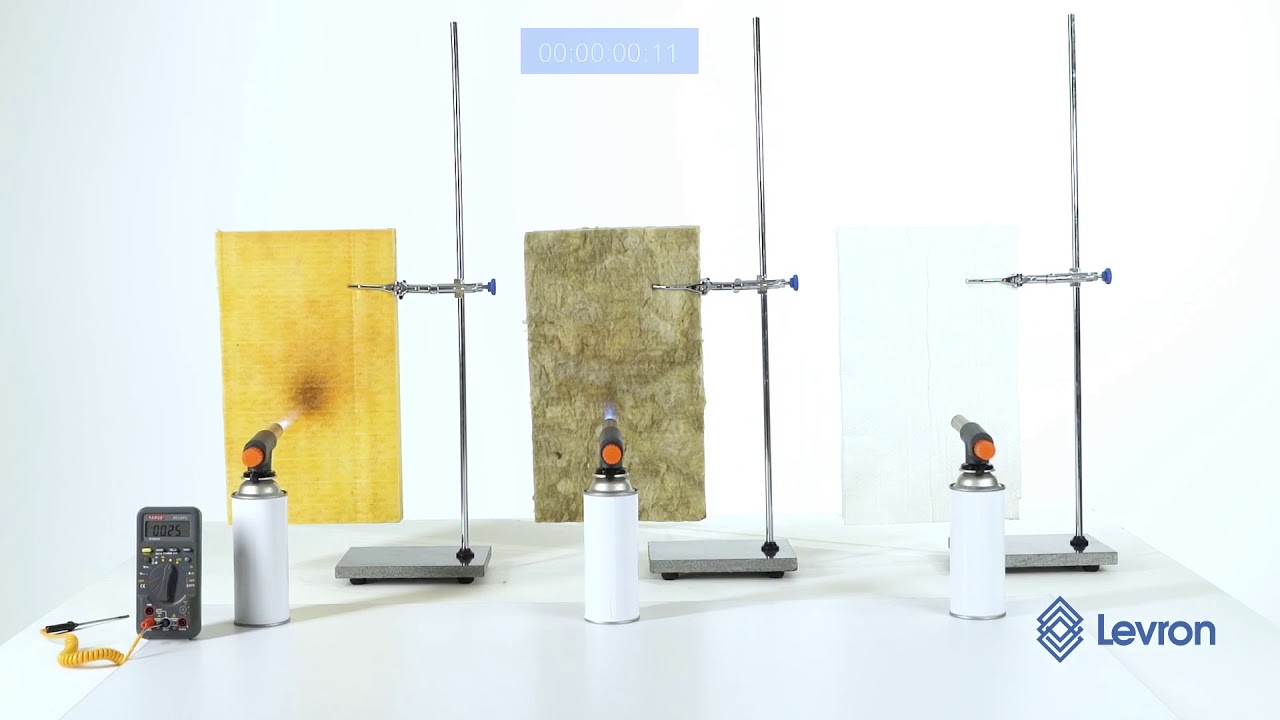
Real test data. In a controlled 1000°C flame test, 2 cm Levron Felt outlasted 5 cm rock wool + 4 cm glass wool combined. Here's the full comparison.
| Property | Rock Wool | Glass Wool | Standard Aerogel | Levron Aerogel Felt |
|---|---|---|---|---|
| Thermal Conductivity | 0.035–0.045 W/m·K | 0.032–0.044 W/m·K | 0.018–0.025 W/m·K | 0.022–0.024 W/m·K |
| Max Temperature | 500–700°C | 400–500°C | 600–900°C | Up to 1300°C |
| Water Resistance | Poor — loses efficiency | Poor — absorbs moisture | Moderate | 165° superhydrophobic |
| Fire Test (1000°C) | 5 cm fails at 9 min | 4 cm fails at 9 min | Variable | 2 cm — test stopped |
| Thickness for Equal R | 6 cm | 5–6 cm | 2–3 cm | ~2 cm |
| Weight | High density | Moderate | Low | Ultra-light (>90% air) |
| Long-Term Stability | Degrades with moisture | Degrades with moisture | Good | 20+ years, zero maintenance |
| Installation Flexibility | Rigid, bulky | Fragile | Varies | Flexible, machinable |
Values represent Levron Aerogel Felt product data compared to representative ranges for conventional insulation material classes. Actual performance depends on specific configurations and operating conditions.
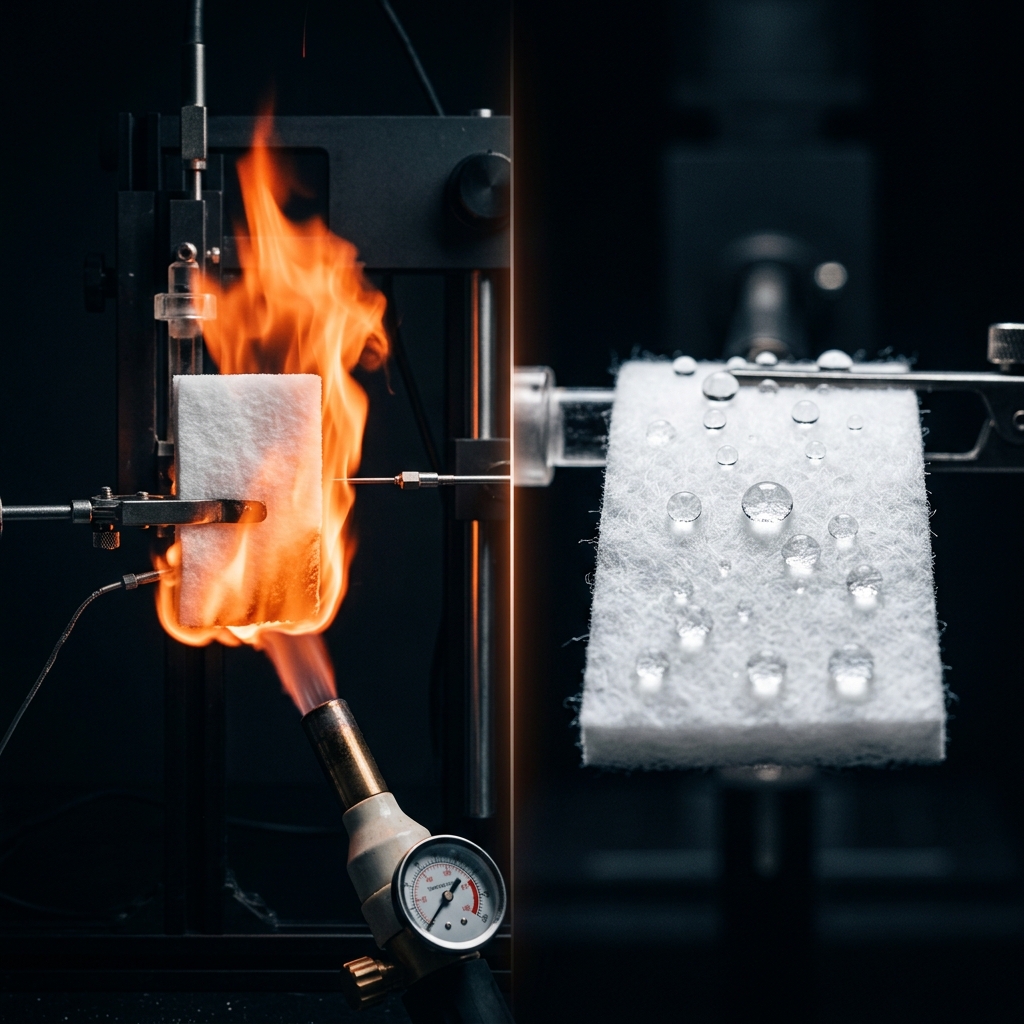
Fire resistance and hydrophobicity are not independent features — they work together to create a fundamentally more reliable insulation system that maintains performance in conditions where conventional materials fail.
At 1000°C direct flame: 5 cm rock wool + 4 cm glass wool (9 cm total) failed within 9 minutes. A single 2 cm Levron Aerogel Felt layer withstood continuous exposure — the test was stopped voluntarily with the material still intact.
165° water contact angle ensures complete moisture rejection. Conventional insulation loses 50%+ efficiency when wet — Levron Aerogel Felt maintains identical thermal performance in dry, humid, wet, or salt-spray environments.
In real-world installations, insulation faces both fire risk and moisture exposure. A material that resists fire but absorbs water — or repels water but fails under flame — provides incomplete protection. Levron Aerogel Felt addresses both simultaneously.
A1 fire class — non-combustible. The material does not contribute to fire load, does not sustain flame, and maintains structural integrity under extreme thermal exposure. The insulation itself never becomes a vulnerability.
165° superhydrophobic behavior active up to 650°C operating temperature. Mechanical impacts do not reduce hydrophobic performance. Zero moisture absorption — maintaining full insulation performance regardless of environmental conditions.
Fire resistance, thermal management, and structural integrity — demonstrated in practice with actual material samples.
Advanced insulation must also be operationally realistic. Levron Aerogel Felt translates technical performance into practical decision value for procurement, operations, and engineering teams.
With >90% air content, the material delivers high-performance insulation with minimal mass. Lower weight means easier handling, reduced structural load on supports, and lower transport costs per installed unit.
Expected 20+ year service life with zero maintenance. No performance degradation, no bacteria or mold growth, no moisture-driven replacement cycles. Lower lifecycle cost across the full operating period.
Thinner material (6–10 mm) means smaller shipping volume. Lighter weight reduces logistics cost. Flexible format enables faster installation. Machinability eliminates specialized fabrication requirements.
Flexible felt conforms to pipes, tanks, and curved surfaces without custom forming. Die-cuttable to specific dimensions. Simpler installation logic for complex or constrained geometries.
Stable performance under rapid temperature changes. Very low thermal expansion means no deformation, no gaps, and no insulation integrity loss during temperature cycling in dynamic thermal environments.
Unlike brittle or rigid insulation formats, aerogel felt maintains structural and thermal integrity under mechanical impact — critical for transport, installation handling, and vibration-exposed systems.
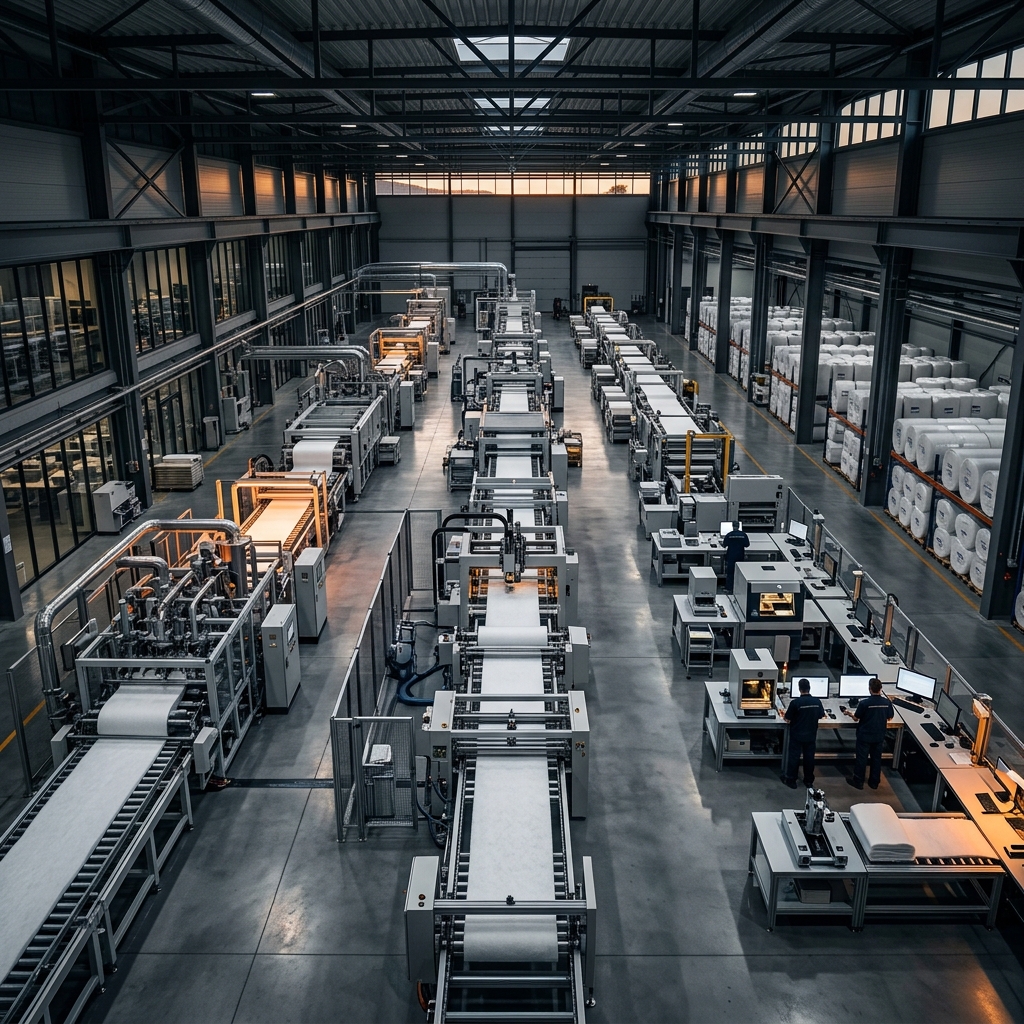
Levron Aerogel is the result of 7 years of dedicated research and development — from thousands of laboratory experiments to a fully integrated 4,000 m² industrial facility. We don't sell a single product SKU. We engineer application-specific aerogel solutions.
Thousands of lab experiments across 5+ aerogel chemistry systems — silica, polymer, metal oxide, carbon, cellulose.
Fully integrated production — from raw material processing through Sol-Gel synthesis to final product formation.
Two core product formats engineered for different application requirements — flexible felt and precision granules.
Application-specific configurations, custom thicknesses, composite structures, and co-developed solutions.
Production method focused on easily deriving nano-products from various raw material types at industrial scale.
Custom solutions co-developed with OEMs, system integrators, and end users for specific requirements.
A structured engagement pathway designed for engineers, procurement professionals, and product developers who require material confidence before integration commitment.
Receive physical samples of Levron Aerogel Felt for hands-on evaluation and initial assessment.
Access full specifications, test data, and engineering documentation for material evaluation.
Discuss application requirements, thermal modeling, and integration concepts with our engineering team.
Small-batch production for application testing, system validation, and integration proof.
Volume production with quality assurance, custom configurations, and ongoing technical support.
Access technical documentation, comparison guides, and educational resources to support your aerogel felt material assessment.
Full specifications: thermal conductivity, temperature range, fire classification, mechanical properties, and dimensional options.
Download PDF →Environmental and safety specifications. Non-toxic, eco-safe material compliant with workplace safety requirements.
Download MSDS →Physical samples of Levron Aerogel Felt for hands-on evaluation, internal testing, and stakeholder demonstration.
Request Samples →Comprehensive benchmarking guide comparing aerogel felt performance against rock wool, glass wool, and standard insulation materials.
Request Guide →Detailed fire test results, A1 classification documentation, and flame exposure performance data.
Request Data →Book a session with our materials engineering team to discuss application requirements, thermal modeling, and integration.
Schedule Call →The standard variant uses glass wool reinforcement and operates continuously from -200°C to +650°C. The ceramic wool variant replaces glass wool with ceramic fiber reinforcement, extending the upper operating limit to 1300°C. Both variants maintain the same silica aerogel matrix, hydrophobic behavior, and insulation performance characteristics.
The 0.012–0.016 W/m·K value represents pure Levron Aerogel material conductivity at the platform level. The 0.022–0.024 W/m·K value represents the applied aerogel felt product — which combines aerogel with glass wool reinforcement for structural integrity. The felt product still outperforms conventional insulation materials by 40–60% in thermal conductivity.
Yes. The 165° superhydrophobic behavior provides complete moisture rejection in rain, humidity, and salt-spray environments. The material does not absorb water, does not grow bacteria or mold, and maintains full insulation performance regardless of weather exposure. UV resistance and chemical inertness further support outdoor durability.
Standard product thickness is 6–10 mm. Multiple layers can be applied for higher thermal resistance. Custom thicknesses, widths, and configurations are available through engineering consultation — including die-cut shapes and application-specific geometries.
Yes. Levron Aerogel and the resulting felt product are non-toxic and eco-safe. The material does not release harmful fibers, does not support bacterial or mold growth, and is suitable for both industrial and indoor applications where personnel contact may occur.
Conventional rock wool and glass wool absorb moisture, losing 50%+ of thermal efficiency when wet. Levron Aerogel Felt is superhydrophobic (165° contact angle) — it physically cannot absorb water. This means identical thermal performance in dry, humid, or wet conditions — a critical advantage in real-world installations where moisture exposure is unavoidable.
Evaluation samples can be provided in small quantities for testing purposes. Production quantities are discussed during engineering consultation based on application requirements, projected volumes, and customization needs. Contact our team to begin the evaluation process.
Choose the engagement pathway that matches your evaluation stage. Our team supports engineers, procurement professionals, technical buyers, and product developers.
Discuss thermal modeling, application fit, and integration concepts with our materials engineering team.
Talk to an EngineerRequest pricing, lead times, volume capabilities, and supply terms for your insulation material requirements.
Request QuoteAccess full specifications, test data, and engineering documentation for material selection and evaluation.
Request DatasheetReceive physical aerogel felt samples for hands-on evaluation, internal testing, and integration prototyping.
Request Sample