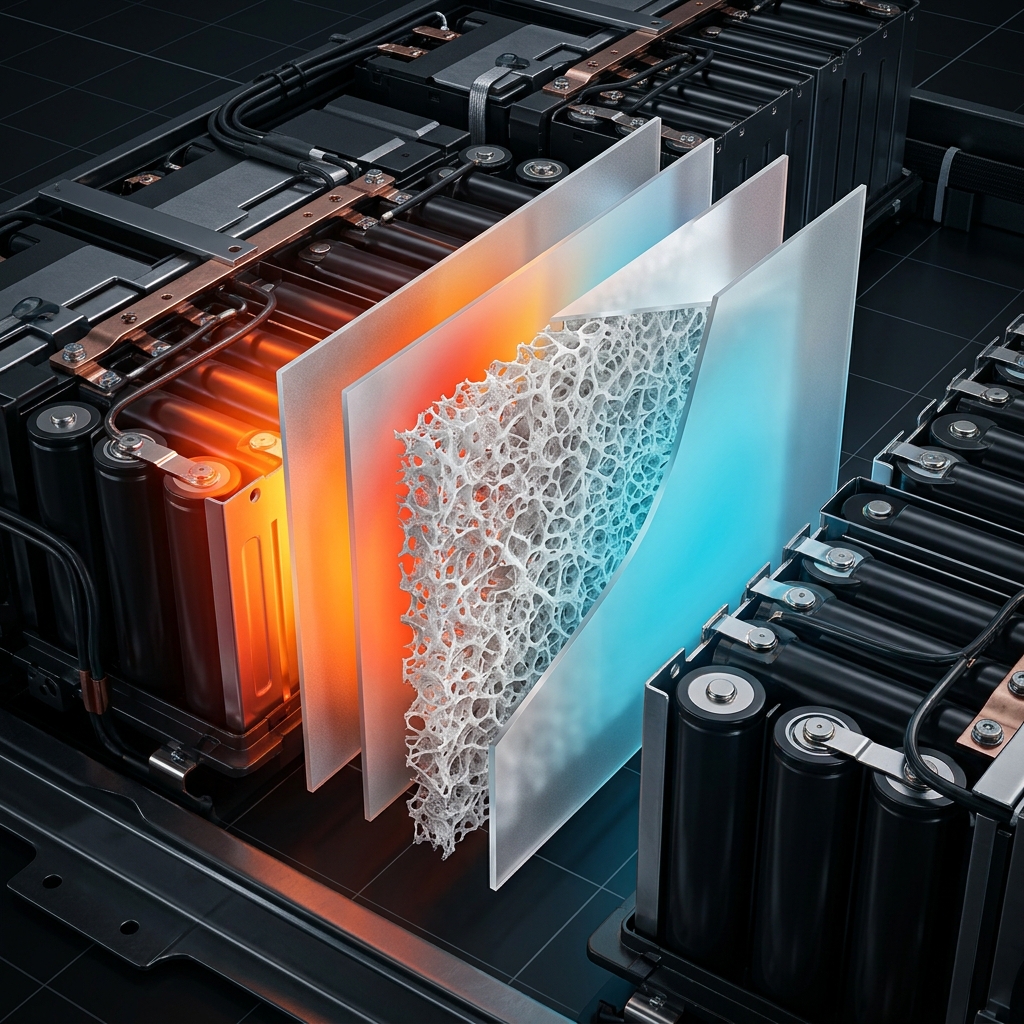
Advanced aerogel-based sheet materials engineered for compact, high-temperature thermal protection — helping support battery safety, passive fire barrier strategies, thermal isolation, and space-efficient system integration across demanding industrial and energy applications.
Levron Aerogel Thermal Barrier Sheets are engineered, aerogel-based sheet materials designed for compact, high-temperature thermal protection. Unlike bulk-fill insulation or roll-format materials, these precision-format flat sheets deliver controlled thermal isolation in a format that integrates directly into constrained architectures.
Flat, dimensionally controlled sheets designed for precise placement in battery packs, enclosures, compartments, and structured assemblies — not a loose or roll-based product requiring secondary forming or containment.
Built on Levron's silica aerogel platform — nano-porous structure with 50–100 nm pores, >90% air by volume, and platform thermal conductivity as low as 0.012 W/m·K. The sheet format inherits the full thermal performance of the aerogel material system.
Achieves equivalent thermal resistance to conventional materials at a fraction of the thickness — enabling thermal barrier integration in space-constrained systems where traditional insulation would consume unacceptable volume.
Sheet thickness, reinforcement type, layer structure, dimensions, and surface treatment can be configured for specific application requirements — from thin cell-to-cell barriers to multi-layer fire protection assemblies.
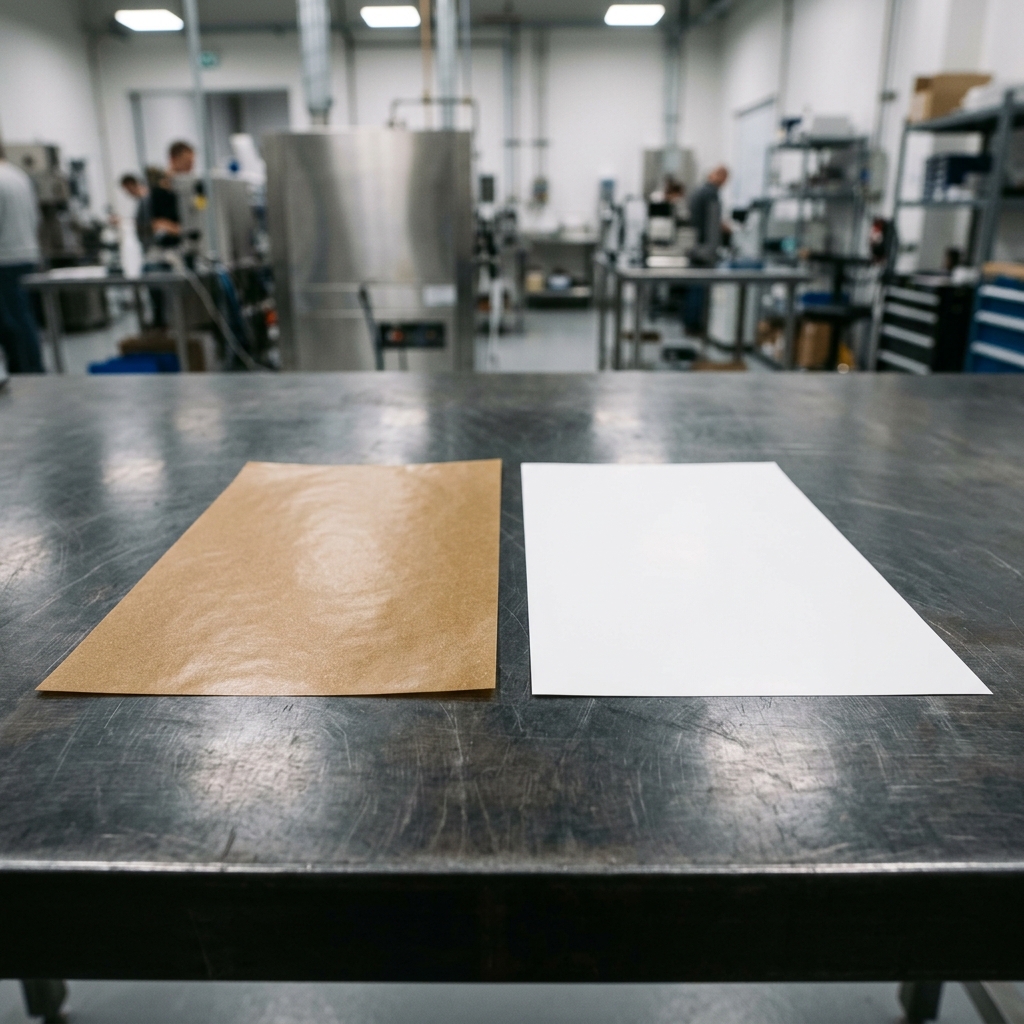
Engineered thermal barrier sheets available in multiple surface coating and reinforcement configurations — each designed for specific operating conditions, temperature ranges, and integration requirements.
Two primary surface coating configurations: Mica paper coated ceramic tulle (left, brown) delivers superior high-temperature resistance for extreme thermal environments. PET film coated ceramic tulle (right, white) provides excellent dielectric and electrical insulation properties for battery applications.
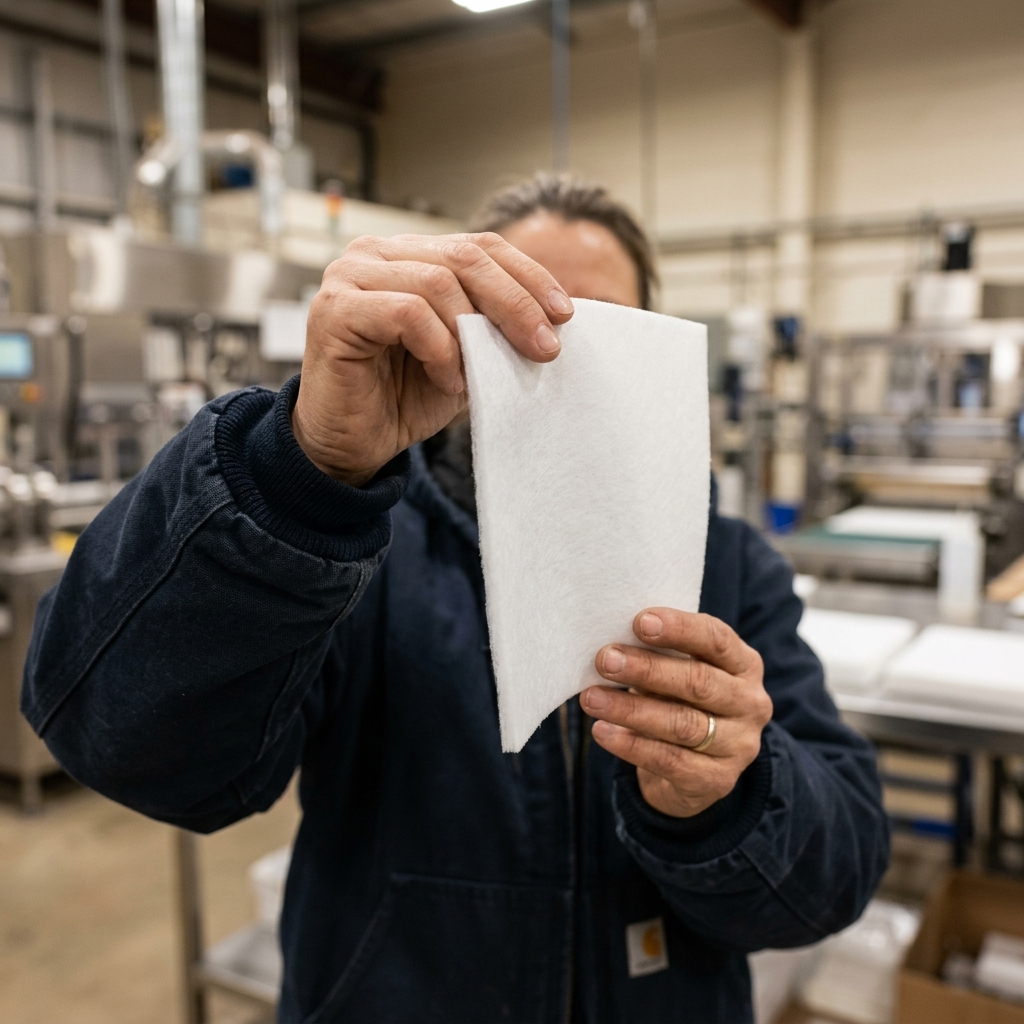
Ultra-thin aerogel-infused glass fiber encapsulation pocket — only 3mm total thickness. Demonstrates the exceptional thinness achievable with aerogel-based thermal barrier technology, enabling integration in the most space-constrained battery and enclosure designs.
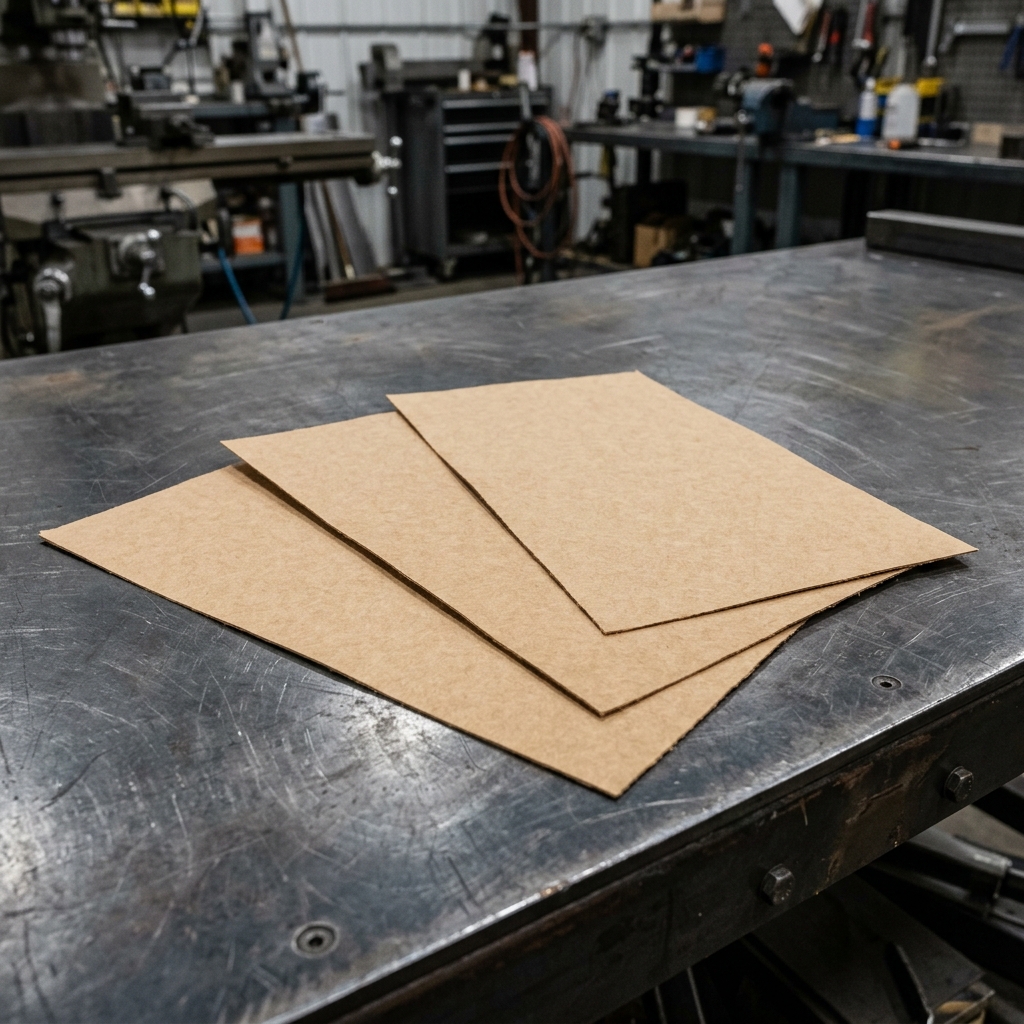
Mica paper coated ceramic tulle barrier sheets manufactured at Levron's 4,000 m² integrated production facility. Each sheet maintains consistent thickness, uniform thermal performance, and precise dimensional control — ready for direct integration into battery pack and industrial thermal protection assemblies.
In compact thermal systems, material format determines integration efficiency. Sheet-based thermal barriers offer advantages that bulk, granular, and roll formats cannot match in precision-engineered assemblies.
Flat sheets can be positioned with millimeter-level accuracy within battery packs, enclosures, and assemblies — enabling targeted thermal isolation exactly where the thermal pathway demands protection.
Sheet materials stack, layer, and interface cleanly with structural, electrical, and thermal management components — supporting multilayer barrier architectures without compromising adjacent system elements.
Uniform thickness across the sheet surface ensures predictable thermal resistance (R-value) mapping. Engineers can calculate thermal performance with confidence — unlike variable-density bulk or fill materials.
Sheet format is inherently compatible with die-cutting, adhesive lamination, and mechanical fastening — supporting automated and semi-automated manufacturing workflows in production environments.
Sheets can be combined in multilayer configurations — alternating aerogel layers with structural, reflective, or composite materials to engineer graduated thermal protection profiles for extreme environments.
Unlike bulky traditional insulation, thin sheet materials integrate into modern pack, module, and enclosure designs without forcing architectural compromises — preserving energy density, cooling pathways, and structural integrity.
Levron Aerogel Thermal Barrier Sheets support customizable integration across multiple zones within battery pack and ESS architectures — each addressing a specific thermal propagation pathway or fire barrier requirement.
Thin aerogel barrier sheets placed between individual cells to interrupt direct thermal conduction during cell failure events. The compact sheet form factor minimizes impact on cell spacing and pack energy density.
Barrier sheets positioned between battery modules within the pack structure. Designed to contain thermal events at the module level — preventing propagation to adjacent modules and supporting compartmental isolation strategies.
Thermal barrier sheets integrated into pack-level fire protection assemblies — supporting passive fire barrier architectures between the battery system and vehicle or enclosure structure.
Sheet materials lining the interior surfaces of battery enclosures — providing a final passive thermal defense layer between the battery system and the external environment.
Thermal barrier sheets deployed within energy storage system cabinets and containers — isolating individual battery racks, modules, or compartments to support thermal containment strategies at the system level.
Engineered multi-layer configurations combining aerogel sheets with structural, reflective, or composite layers — designed through collaboration to meet specific thermal loads, fire protection requirements, and integration constraints.
Thermal Barrier Sheet performance is grounded in the Levron Aerogel material platform — delivering measurable thermal, fire, and environmental properties that support engineering evaluation and system design confidence.
Platform-level conductivity among the lowest of any commercially available solid material. Sheet products with reinforcement deliver applied conductivity of approximately 0.022–0.024 W/m·K — still significantly below any conventional alternative.
Glass wool-reinforced standard configuration. Ceramic wool variants extend the upper operating limit to approximately 1300°C for extreme thermal applications.
Superhydrophobic behavior active up to 650°C. Complete moisture rejection ensures long-term thermal performance stability in humid or sealed environments.
Ultra-high porosity creates one of the lightest solid materials known — enabling thermal protection without meaningful weight penalty in mass-sensitive systems.
Non-combustible classification at the felt platform level. In controlled 1000°C flame testing, 2cm Levron Felt outlasted 9cm of combined conventional materials.
High specific heat capacity contributes to thermal energy absorption during rapid temperature excursion events — the barrier doesn't only block heat, it buffers transient energy.
Sufficient structural integrity for compression environments within battery modules, pack assemblies, and structured enclosure configurations.
Maintains thermal performance, hydrophobicity, and structural integrity over extended service periods. No bacteria growth. No mold. Zero maintenance required.
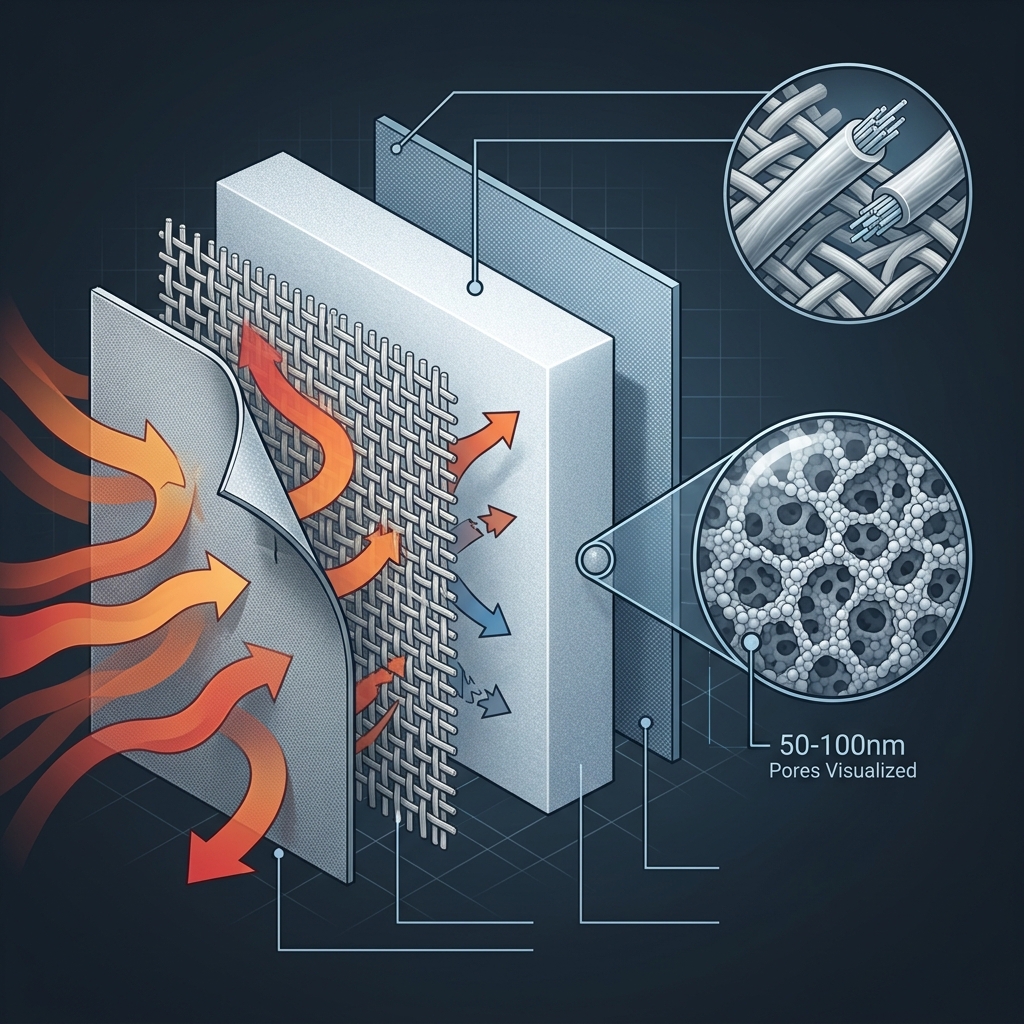
The thermal performance of Levron Aerogel Thermal Barrier Sheets is not achieved through material bulk — it is engineered into the molecular-scale structure of the silica aerogel core, enabling thin sheets to deliver protection that thick conventional materials cannot match.
A three-dimensional network of interconnected silica particles creates nano-scale pores smaller than the mean free path of air molecules — physically constraining gas-phase thermal conduction at the molecular level.
Conduction minimized (tortuous solid pathways), convection eliminated (molecular-scale air confinement), radiation scattered (within the pore network). All three heat transfer mechanisms addressed simultaneously within a single thin sheet layer.
The material is overwhelmingly composed of trapped air — resulting in exceptionally low density. For sheet-format applications, this means effective thermal protection without meaningful mass penalty per unit area.
Chemical modification of the silica surface creates superhydrophobic behavior (165° contact angle) — ensuring sheets maintain full thermal performance regardless of moisture exposure, humidity, or condensation in sealed systems.
A structured comparison across key performance parameters — helping engineers and procurement teams understand why aerogel-based sheet materials represent a different class of compact thermal protection.
| Parameter | Rock Wool Sheets | Glass Wool Boards | Generic Fire Barrier | Levron Thermal Barrier Sheet |
|---|---|---|---|---|
| Thermal Conductivity | 0.035–0.045 W/m·K | 0.032–0.044 W/m·K | 0.04–0.08 W/m·K | 0.012–0.016 W/m·K |
| Thickness for Equal R-value | 6 cm | 5–6 cm | 4–8 cm | ~2 cm |
| Max Operating Temp | 500–700°C | 400–500°C | 300–600°C | Up to 1300°C |
| Moisture Resistance | Poor — absorbs water | Poor — absorbs water | Variable | 165° superhydrophobic |
| Weight Impact | High (dense) | Moderate | Moderate-High | Ultra-low (>90% air) |
| Integration Precision | Bulky, rigid | Fragile edges | Limited flexibility | Precise, die-cuttable |
| Long-Term Stability | Degrades with moisture | Degrades with moisture | Variable | 20+ years stable |
| Fire Performance (1000°C) | 5cm fails at 9 min | 4cm fails at 9 min | Variable | 2cm — test stopped |
Data represents Levron Aerogel platform and felt-level testing. Comparison values are representative ranges for conventional material classes. Actual sheet product performance depends on specific configurations, reinforcement type, and application requirements.
For thermal barrier sheets deployed in battery, ESS, and fire-critical environments, two properties transform basic thermal insulation into system-level protection confidence: extreme heat endurance and complete moisture independence.
In controlled laboratory flame testing at 1000°C: 5cm rock wool combined with 4cm glass wool (9cm total conventional material) failed within 9 minutes. A single 2cm layer of Levron Aerogel Felt withstood continuous flame exposure — the test was stopped voluntarily with the material still structurally intact.
Thick fire barriers consume space. In battery packs and compact enclosures, a thin sheet material that delivers equivalent or superior fire performance creates direct engineering value — more energy density, more cooling space, less weight, and no compromise on protection.
Conventional insulation materials absorb moisture over time — losing 50%+ thermal efficiency. Levron Aerogel's 165° superhydrophobic contact angle, active up to 650°C, ensures complete water rejection. In sealed battery environments, this means reliable thermal performance for the full system lifecycle.
Standard configuration operates from -200°C to +650°C. Ceramic wool variants push upper limits to 1300°C. Non-combustible A1 fire classification at the felt platform level confirms the material never contributes to fire load.
165° superhydrophobic behavior means zero water absorption under any humidity condition. No bacteria growth, no mold formation, no maintenance required. The sheet maintains identical thermal performance from installation through the full service lifecycle.
Levron Aerogel Thermal Barrier Sheets can be adapted to specific application requirements through engineering collaboration — from sheet thickness and reinforcement type to multilayer assemblies and die-cut formats.
Share your thermal protection challenge, system constraints, operating temperatures, space limitations, and integration requirements. Our engineering team evaluates fit and identifies initial configuration options.
Select from sheet thickness options, reinforcement types (glass wool, ceramic wool), surface treatments, adhesive layers, and multilayer composite configurations tailored to your system architecture.
Receive configured samples in relevant formats. Conduct your own thermal, fire, mechanical, and environmental testing using your internal protocols and validation requirements.
From small-batch pilot runs to volume production — backed by our integrated 4,000 m² facility with full quality control, consistent lead times, and ongoing engineering support.
From thin cell barriers to thicker fire-rated panels — configured to match exact thermal performance requirements.
Aerogel core combined with structural, reflective, or protective layers in engineered configurations.
Precision die-cutting for complex shapes, cutouts, and component-specific geometries in production volumes.
Co-development support from concept through testing to scaled production — not just a material, a partnership.
7 years of dedicated R&D, 4,000 m² of integrated production capacity, and multi-aerogel chemistry expertise make Levron Aerogel a serious long-term partner for advanced thermal protection development.
Not an outsourced supply chain. Complete manufacturing control from raw chemistry through final product — ensuring quality consistency, IP protection, and reliable supply for demanding applications.
Continuous process optimization focused on scalability, cost reduction, and material performance advancement — positioning Levron for volume production across industrial, energy, and mobility markets.
From initial material exploration through pilot evaluation to scaled supply — Levron works as a co-development partner, not just a transactional supplier. Technical teams engage directly with application engineers.
Thermal protection solutions relevant across EV battery, ESS/BESS, industrial high-temperature, construction, defense, and specialty applications — supporting diversified supply relationships.
A structured evaluation pathway designed for engineering teams and procurement professionals who need material confidence before integration commitment.
Share your application requirements, thermal challenges, and design constraints. Our materials engineering team evaluates fit and recommends initial sheet configurations for your use case.
Receive thermal barrier sheet samples in relevant configurations, thicknesses, and formats. Conduct your own thermal, fire, mechanical, and environmental testing using internal protocols.
Collaborate on application-specific configurations — custom thicknesses, multilayer composites, die-cut formats, adhesive integration, surface treatments, and packaging specifications.
Small-batch manufacturing run to validate production consistency, quality parameters, and supply chain logistics before committing to volume production.
Volume production from our integrated 4,000 m² facility — with quality control, consistent lead times, and ongoing engineering support for the lifetime of the partnership.
Access technical documentation, material data, and educational resources to support your evaluation of aerogel-based thermal barrier sheet materials.
Comprehensive overview of the Levron Aerogel Thermal Barrier Sheet platform: material properties, format advantages, application concepts, and engineering specifications.
Request Product Overview →Detailed specifications: thermal conductivity, temperature range, sheet dimensions, fire classification, mechanical properties, and environmental data for engineering evaluation.
Request Technical Datasheet →Receive physical samples of Levron Aerogel Thermal Barrier Sheets for hands-on evaluation, internal testing, and integration prototyping.
Request Samples →Full specifications for the Levron Aerogel Felt platform — the foundational material technology behind the Thermal Barrier Sheet product family.
Download PDF →Understanding why thin-format thermal barriers outperform thick conventional materials — the physics, the engineering logic, and the system value of compact protection.
Request Guide →Conceptual guide to passive fire barrier strategies in battery pack and ESS architectures — how thermal barrier sheets support safety system design.
Request Guide →Material science behind passive thermal isolation — including hydrophobicity, nano-porosity, and environmental stability advantages of aerogel-based sheet materials.
Request Guide →Book a one-on-one session with our materials engineering team to discuss your specific thermal protection application requirements and sheet configuration options.
Schedule Call →The Levron Aerogel platform achieves thermal conductivity of 0.012–0.016 W/m·K at the base material level. In applied sheet configurations with reinforcement fibers, conductivity is approximately 0.022–0.024 W/m·K — still significantly lower than any conventional thermal barrier material.
Thermal Barrier Sheets are precision-format flat sheets designed for direct integration into structured assemblies — battery packs, ESS compartments, and enclosures. They share the same aerogel platform technology as Levron Felt but are configured specifically for sheet-format applications requiring dimensional control, precise placement, and flat-layer integration.
Standard glass wool-reinforced sheets operate from -200°C to +650°C continuously. For extreme-temperature applications, ceramic wool-reinforced variants extend the upper operating limit to approximately 1300°C.
Yes. Levron Aerogel Thermal Barrier Sheets can be produced in a range of thicknesses, dimensions, and configurations to suit specific integration requirements. Custom die-cut shapes, adhesive-backed variants, and multilayer composite structures are developed through engineering collaboration.
Yes. Thin-format thermal barrier sheets are conceptually relevant for cell-to-cell thermal propagation mitigation in battery packs. The compact profile minimizes impact on cell spacing, while the aerogel core delivers thermal resistance significantly exceeding conventional alternatives at equivalent thickness.
In sealed battery packs and enclosed ESS environments, moisture ingress can degrade conventional insulation materials by 50%+. Levron's 165° superhydrophobic surface completely rejects water — ensuring consistent thermal protection throughout the system's lifecycle regardless of humidity conditions.
Levron supports engineering evaluation programs starting with small sample quantities. Contact our team to discuss your evaluation requirements — we structure sample programs to match your testing protocol and timeline.
Yes. Levron can engineer multilayer configurations combining aerogel core sheets with structural, reflective, adhesive, or barrier layers to meet specific thermal loads, fire protection requirements, and mechanical integration constraints. These are developed through co-engineering collaboration.
Choose the engagement pathway that matches your role and evaluation stage. Our team supports engineers, procurement professionals, OEM integrators, and product developers.
Discuss material capabilities, thermal performance data, sheet configurations, and integration concepts with our engineering team.
Talk to an EngineerRequest quotes, discuss supply terms, lead times, and volume pricing for thermal barrier sheet materials.
Request QuoteInitiate a pilot project — from custom configuration through sample evaluation to scaled production partnership.
Start a Pilot ProjectRequest the full technical datasheet with thermal conductivity, temperature range, fire classification, and engineering specification data.
Request Technical DatasheetRequest physical samples of thermal barrier sheets for hands-on evaluation, prototyping, and internal testing.
Request Sample